R R EXPORTS
TAMARINDTamarind is a hardwood tree known scientifically as Tamarindus indica.
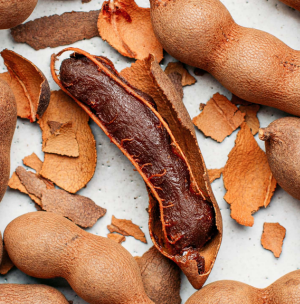
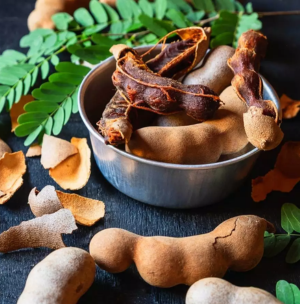
Tamarind is a type of tropical fruit. It’s used in many dishes around the world, and may even have medicinal properties. The tree produces bean-like pods filled with seeds surrounded by a fibrous pulp. The pulp of the young fruit is green and sour. As it ripens, the juicy pulp becomes paste-like and more sweet-sour. Interestingly, tamarind is sometimes referred to as the “Date of India.”
Foreign Names of Tamarind
Arabic : Tamr al-hindi, Burmese : Ma-gyi-thi, Chinese : Da ma lin, Czech : Tamarind, Dutch : Tamarinde, French : Tamarin, German : Tamarinde, Italian : Tamarindo, Japanese : Tamarindo, Spanish : Tamarindo.
Cooking Uses
Tamarind pulp is widely used for cooking in South and Southeast Asia, Mexico, the Middle East and the Caribbean. The seeds and leaves are also edible. It is used in sauces, marinades, chutneys, drinks and desserts. It’s also one of the ingredients of Worcestershire sauce.
Medicinal Uses
- Tamarind has played an important role in traditional medicine.
- In beverage form, it was commonly used to treat diarrhea, constipation, fever and peptic ulcers. The bark and leaves were also used to promote wound healing.
- Modern researchers are now studying this plant for potential medicinal uses.
- The polyphenols in tamarind have antioxidant and anti-inflammatory properties. These can protect against diseases such as heart disease, cancer and diabetes.
Home Uses
Tamarind pulp can also be used as a metal polish. It contains tartaric acid, which helps remove tarnish from copper and bronze.
Consumption Of Tamarind
This fruit has many uses. It’s used for cooking, health and household purposes in India as well as many foreign countries. Many peoples make juice from the Tamarind which is more useful in Ramadan period. Consumption of Tamarind in liquid form or pods are more beneficial in summer days to keep the body cool. It also available in candy form which can be consume directly. The seeds and leaves are also edible. It is used in sauces, marinades, chutneys, drinks and desserts. It’s also one of the ingredients of Worcestershire sauce.
Origin and Distribution
Tamarind is now extensively cultivated in India and the Tamarind Exporters from India thus reigns in the markets of Europe, America and West Asia. In India, it is chiefly grown in Madhya Pradesh, Andhra Pradesh, Tamil Nadu, Karnataka and Maharashtra. The tree is not exacting as regards to soil but thrives best in deep alluvium. The tree prefers warm climate but sensitive to frost. Tamarind is suited to semi-tropical region with low rainfall. It can come up even in saline, alkaline a gravelly soils and soils prone to erosion.
Availability
Indian Tamarind Harvesting starts from February till April end. We can keep the tamarind fresh without cold storage till June. After June month it goes in cold storage in 13+ degree temperature. And can be available whole year in Light brown and Brown color.
Harvesting- Indian Tamarind Harvesting starts from February to April ending.
Different Forms of Tamarind
Tamarind is available in prepared forms, such as candy and sweetened syrup. You can also find the pure fruit in three main forms:
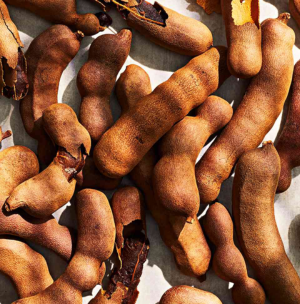
- Raw pods: These pods are the least processed form of tamarind. They’re still intact and can be easily opened to remove the pulp.
- Pressed block: To make these, the shell and seeds are removed and the pulp is compressed into a block. These blocks are one step away from raw tamarind.
- Concentrate: Tamarind concentrate is pulp that has been boiled down. Preservatives may also be added.
Different Qualities:
Quality defines the % of seeds and the colour.
- Golden or light Brown Tamarind- This colour will be there for just 1 month after harvesting.
- Brown Tamarind – It turns into Brown colour after 2 months of harvesting.
- Black Tamarind – Old Tamarind turns into Black Tamarind and this is also very famous.
The above three qualities are offered in different percentage of seeds like 2% to 35% whereas in whole raw pods, seeds will be 35% to 40%.
Concentration of Tamarind in Pulp form is available with 0% seeds and also available with seeds as per demand.
Packing of Tamarind
We have been able to carve a niche for ourselves in the industry with our ability to customize our products & product packaging. We ensure customized packaging as per our client’s requirement and meet the stipulated time frame. We customize the packaging according to our clients’ specification based on:
Product Quantity (consumer packing = 150gms to 5kgs, bulk packing = 20kgs, 25kgs, 50kgs.)
Type of Packaging (packed in poly-packs, paper boxes, etc.) Packaging According to the market being catered to. (Varying environmental conditions, time in transit, etc.)
Standard Packing for Export
The various packing’s which can be offered in consumer slabs are as follows:-
- 01 Kg Slab x 20 Packets = 20 Kg in a Master Carton.
- 500 Gms. Slab x 40 Packets = 20 Kg in a Master Carton.
- 500 Gms. Slab x 20 Packets = 10 Kg in a Master Carton.
- 200 Gms. Slab x 50 Packets = 10 Kg in a Master Carton.
- 150 Gms. Slab x 40 Packets = 06 Kg in a Master Carton.